Dallas, TX
Sliding Gate Installation in Dallas, TX
Morrison Gate & Fence installs sliding gate systems for Dallas homes and businesses where a sideways-traveling gate suits the entrance better than a swing layout — tight aprons, wider driveways, controlled entrances, and properties built for automation.
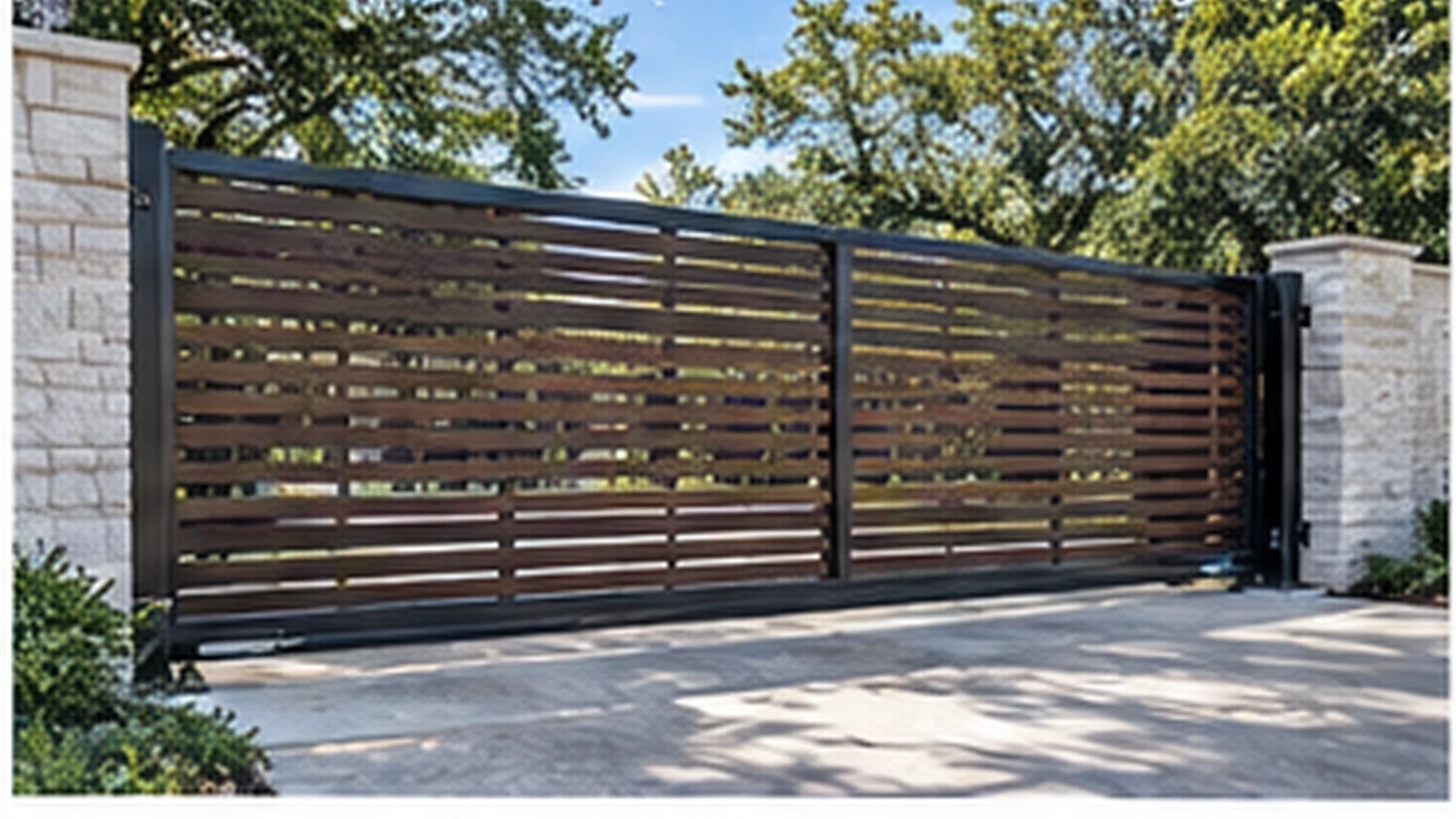
Why Choose a Sliding Gate?
A sliding gate moves along the fence line instead of swinging through the driveway, and that single difference solves several common entrance problems. Where a swing leaf needs a clear arc — room in front of and behind the gate line — a sliding gate needs room beside it. That makes it the practical choice when there's limited swing clearance: a short driveway apron, a slope rising from the street, parked vehicles near the entrance, or landscaping you don't want to cut back.
Sliding layouts also scale well to wider driveways, since a single sliding leaf can span an entrance that would demand an impractically long swing gate. On controlled entrances — residential communities, business yards, anywhere access is managed — the sliding format pairs naturally with operators and entry controls, for both residential and commercial use.
That said, sliding isn't automatically the right answer. It trades swing clearance for side room, and it asks more of the ground along its travel path. The comparison section below covers when each layout makes sense, and our company-wide sliding gate systems page covers how these gates are built.
Residential Sliding Driveway Gates in Dallas
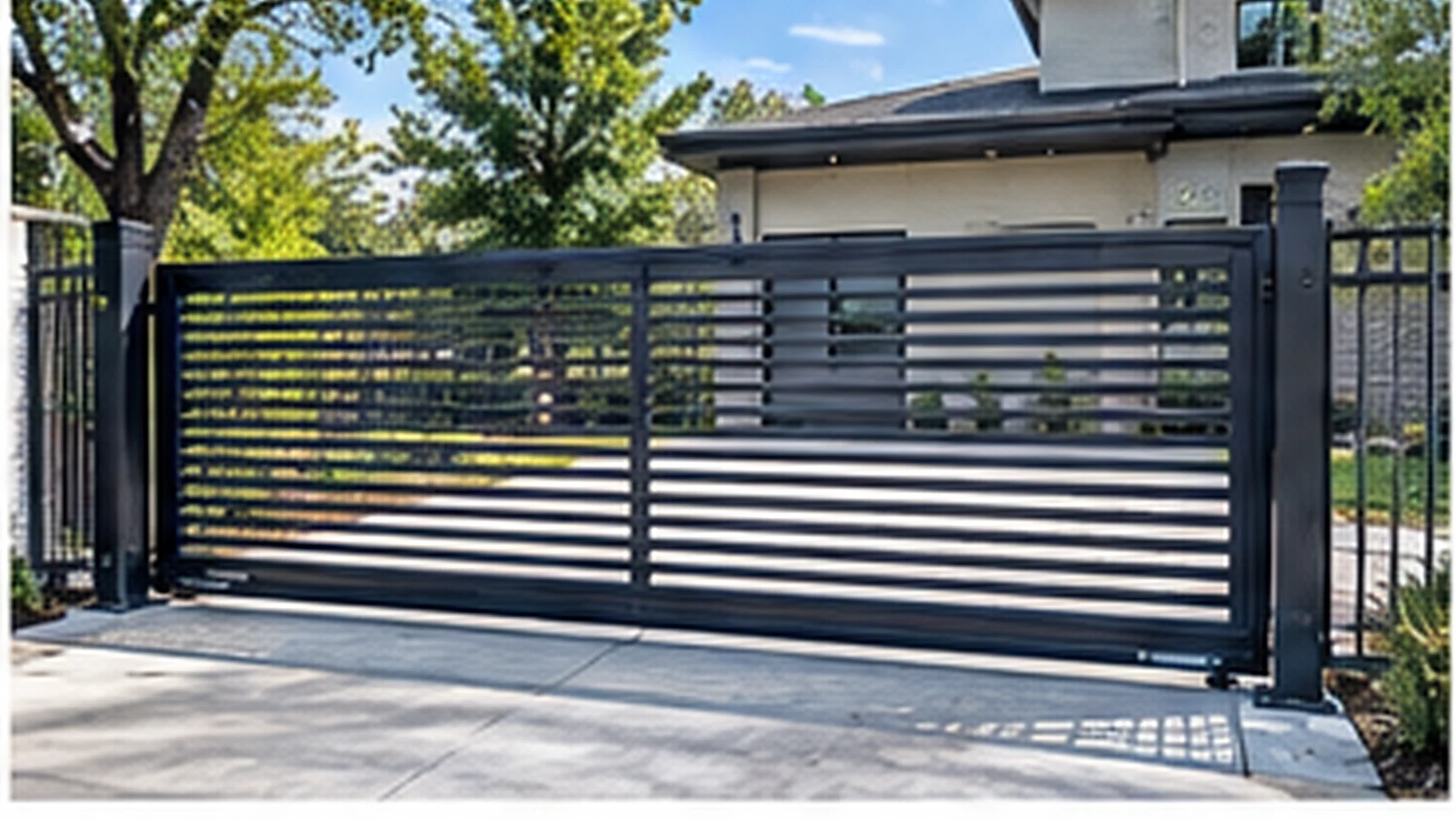
At a house, a sliding driveway gate is usually solving a layout problem as much as a security one. A driveway that opens close to the street, rises uphill, or leaves little standing room for a swing leaf is the classic case — the gate retracts along the fence instead of sweeping through space you don't have. Day to day, the payoff is simple driveway access you don't have to think about: pull up, open, pull through, close.
Privacy plays a role too. A sliding gate can carry the same infill as the fence it runs alongside, so the entrance reads as a continuation of the fence line rather than a separate structure. Automation is the norm rather than the exception on these installations — a manual sliding gate across a daily-use driveway gets old quickly — and the design choices around style, infill, and hardware are where custom gate design comes in.
Property layout drives everything else: where the gate parks when open, how the fence line runs, and how much straight, usable side room exists. More on residential gates and driveway gates across the metroplex.
Commercial Sliding Gates in Dallas
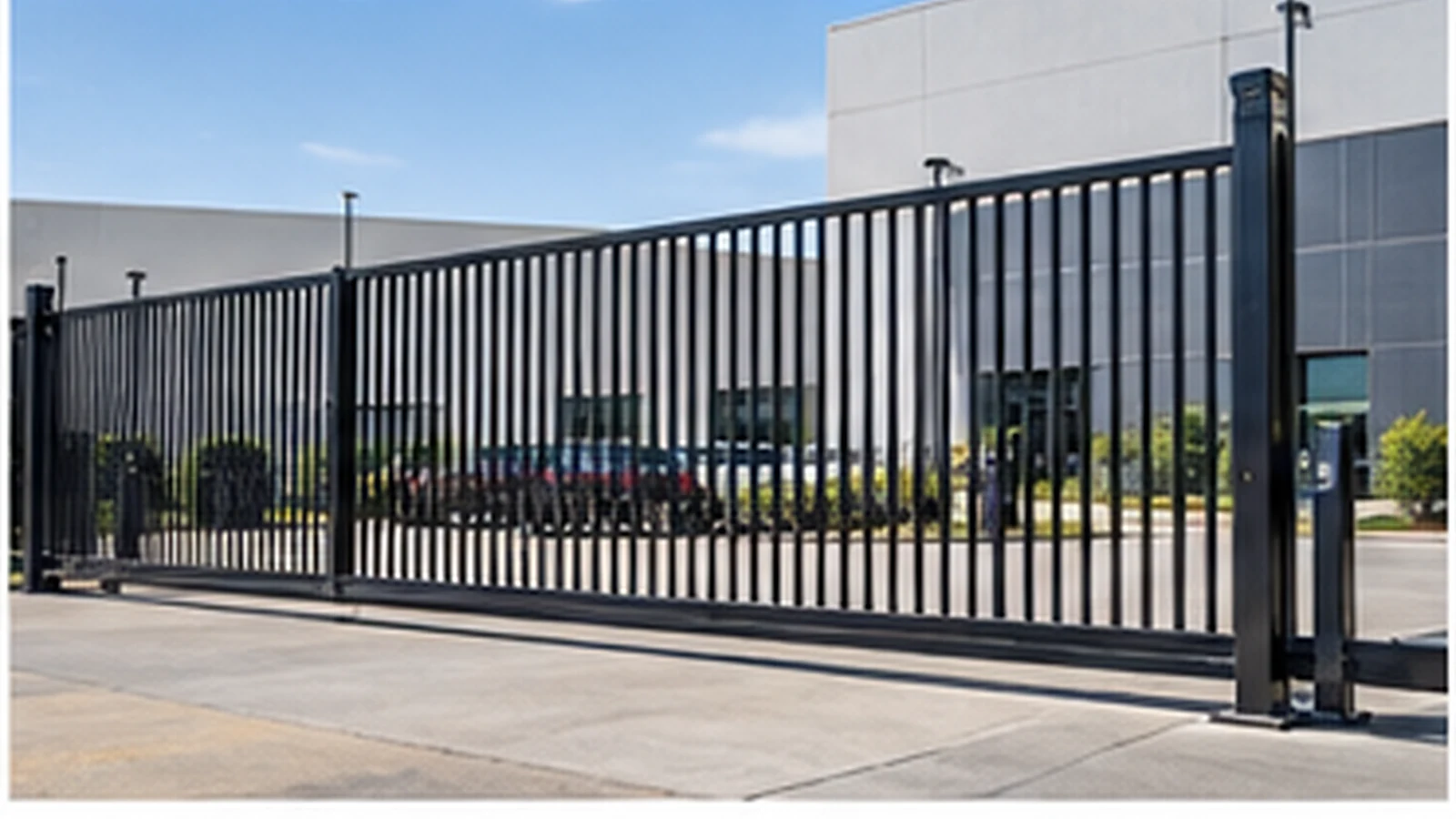
Commercial entrances put different demands on a gate: higher cycle counts, wider openings, delivery and fleet traffic, and usually some form of controlled access. Sliding gates suit these environments well — the layout handles wide spans without doubling leaf weight into a swing arc, and the travel path keeps the gate out of the traffic lane it's controlling.
A business entrance is rarely just a gate. It ties into keypads, card readers, telephone entry, or vehicle detection, and the gate has to work with all of it. We plan the gate, operator, and entry devices as one system. See commercial gates and access control systems for how we approach controlled entrances.
Automatic Sliding Gate Systems
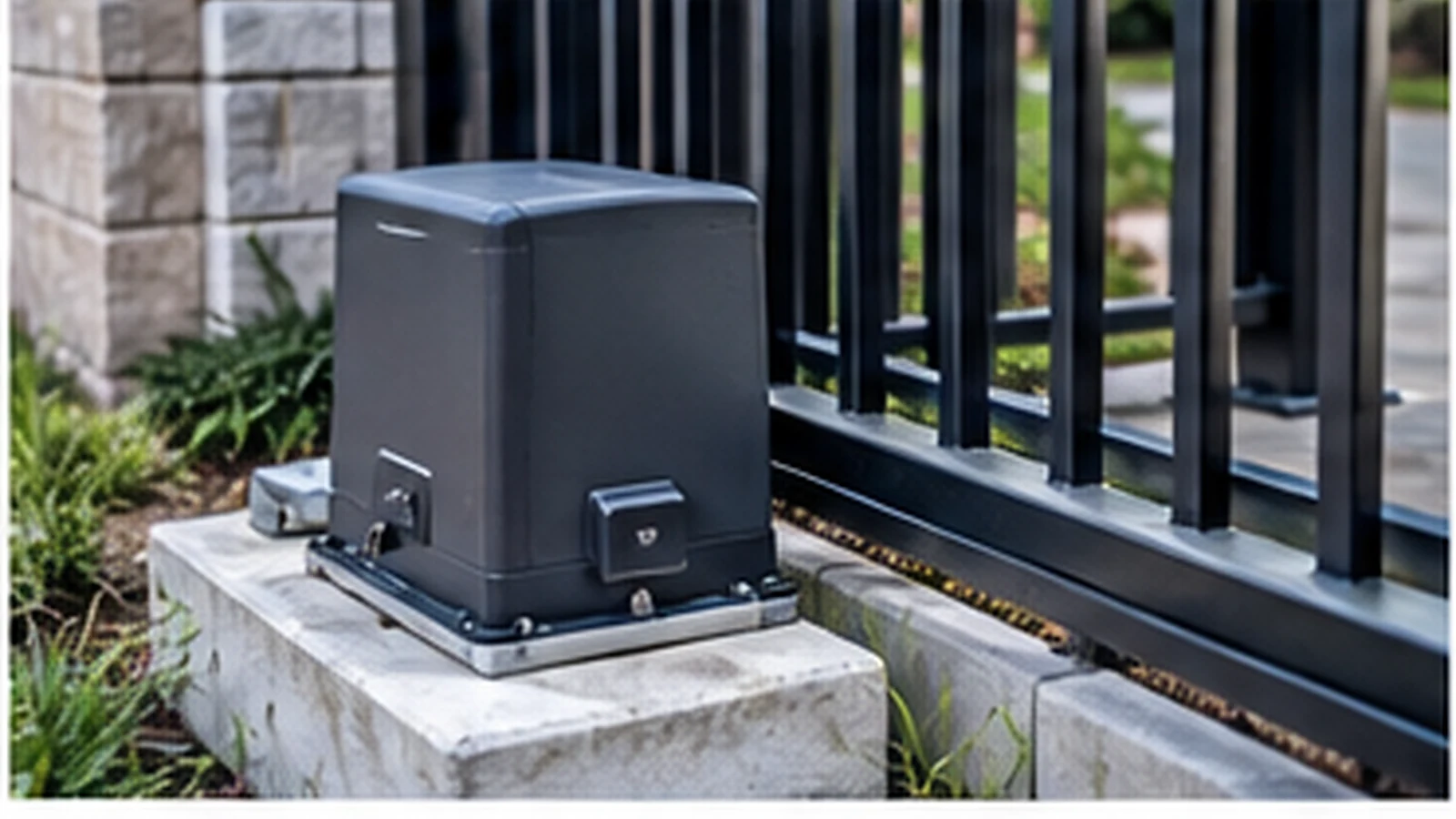
Automating a sliding gate means matching an operator to the gate's weight and travel, then wiring in the controls and safety devices that make it usable. The drive connection moves the gate; limit or positioning devices tell the operator where the gate is; safety devices watch the travel path and stop the gate when something's in it. Every piece has to agree with the others, which is why we size the equipment to the gate rather than fitting a gate to whatever operator is on the truck.
Entry controls are chosen around how the entrance is actually used: remotes for household vehicles, a keypad for guests or deliveries, and access-control integration where a property manages who comes in. We install and service these systems as part of the gate, and we don't claim affiliation with any operator manufacturer. More on automatic gate systems and access control.
Sliding Gate Track and Layout Considerations
Whether a sliding gate works on a given entrance comes down to the site, not the gate. The questions we work through on a site visit are consistent: how much side room is available along the fence line, how wide the driveway is, whether the ground slopes and in which direction, how heavy the gate design will be, what structural support the posts and footings can provide, whether the travel path is straight and clear, and how the existing fencing ties in.
A tracked gate runs on a ground-mounted rail, so that strip of ground has to stay level and clear for the life of the gate. A cantilever gate carries the opening without ground contact, which removes the track from the driveway surface at the cost of a longer overall leaf. Neither is universally better — the grade, the soil, and the traffic across the entrance decide. This is orientation, not engineering advice; the specifics get settled on site.
Sliding Gate Installation vs. Swing Gate Installation
Both layouts are proven, and neither is universally superior — they answer different site conditions. A swing gate is often simpler: fewer ground works, a straightforward arc, and a long track record on standard residential driveways with room to spare. It asks for clearance through its swing and behaves best on reasonably level ground across the entrance.
A sliding gate asks for side room and a prepared travel path instead. In exchange it handles wide openings, short aprons, and entrances where a swing arc would cross parked cars, landscaping, or a sloped approach. On automated, controlled entrances it's frequently the more natural fit. When we walk a property, we look at the actual constraints and recommend what fits. Our Dallas driveway gate planning guide compares the broader entrance choices, while gate installation covers other gate types across DFW.
Sliding Gate Repair and Existing Systems
If you already have a sliding gate that isn't moving the way it should, a new installation may not be the answer. Gates that have gone stiff, noisy, or unreliable often need adjustment, roller or hardware work, operator service, or a worn component replaced — not a complete replacement. We evaluate existing systems the same way we plan new ones: gate first, then the hardware, then the operator and controls.
Our gate repair service covers that work across DFW, and for automated gates specifically, the automatic gate repair page for Dallas walks through symptoms, diagnosis, and when repair makes sense versus replacement.
Sliding Gate Installation FAQs
How much space does a sliding driveway gate need?
Roughly the width of the opening again, along the fence line — the leaf has to park somewhere when it's open. A 16-foot entrance needs around 16 feet of clear, straight run beside it. A cantilever design also carries a counterbalance section beyond the opening, so it needs a bit more room than the clear width alone. Measuring the usable side run is one of the first things we do on a site visit.
Can a sliding gate be automated?
Yes — most sliding gates we install are built for automatic operation from the start, with the operator, drive connection, and safety devices sized to the gate's weight and travel. Automation adds entry controls like remotes and keypads, and can tie into access control where a property needs it. The operator has to match the gate, which is why the layout and equipment decisions happen together.
Are sliding gates suitable for residential driveways?
They can be a great fit, particularly where there isn't room for a swing leaf — a short apron, an uphill approach from the street, or landscaping close to the entrance. The trade-off is the side room required for the gate to retract. If the fence line beside the driveway is clear and straight, a sliding layout often solves problems a swing gate can't.
Can an existing manual sliding gate be automated?
Often, yes — provided the gate itself is in good shape. The gate needs to roll freely and straight before an operator goes on, because automation doesn't fix binding, worn rollers, or a frame that's out of square. We evaluate the gate first, correct what needs correcting, and then match an operator to its weight and length.
What causes a sliding gate to stop moving correctly?
Usually something in the travel path: worn or seized rollers, debris on the track, a run that's gone out of level, or a guide that no longer holds the gate plumb. On automated gates, the drive components and the devices that tell the operator where the gate is can also drift out of agreement. A gate that catches in the same spot every time is pointing right at the cause.
Is a sliding gate suitable for a sloped driveway?
It depends on the direction of the slope. A sliding gate travels sideways, so a driveway that slopes across the entrance matters less than it would for a swing gate — but the ground along the travel path still has to support the gate's track or cantilever hardware on a consistent line. Slope along the fence line is workable in many cases; we confirm the grade on site before recommending a layout.
Sliding Gate Service in Dallas
We install sliding gate systems across Dallas, including Lakewood, Preston Hollow, Oak Cliff, and Lake Highlands, along with surrounding areas. For everything else we build and repair in the city, see the Dallas service area page.
Planning a Sliding Gate Project in Dallas?
Tell us about the entrance — width, slope, how much room runs along the fence — and we'll tell you what a sliding layout would involve. Photos of the driveway and fence line help.