Garland, TX
Driveway Gate Installation in Garland, TX
A driveway gate works best when it's planned around the entrance it serves. We start with how wide the opening is, how the property is laid out, which way the gate can move, how much room there is for it, and whether it needs an operator and entry controls.
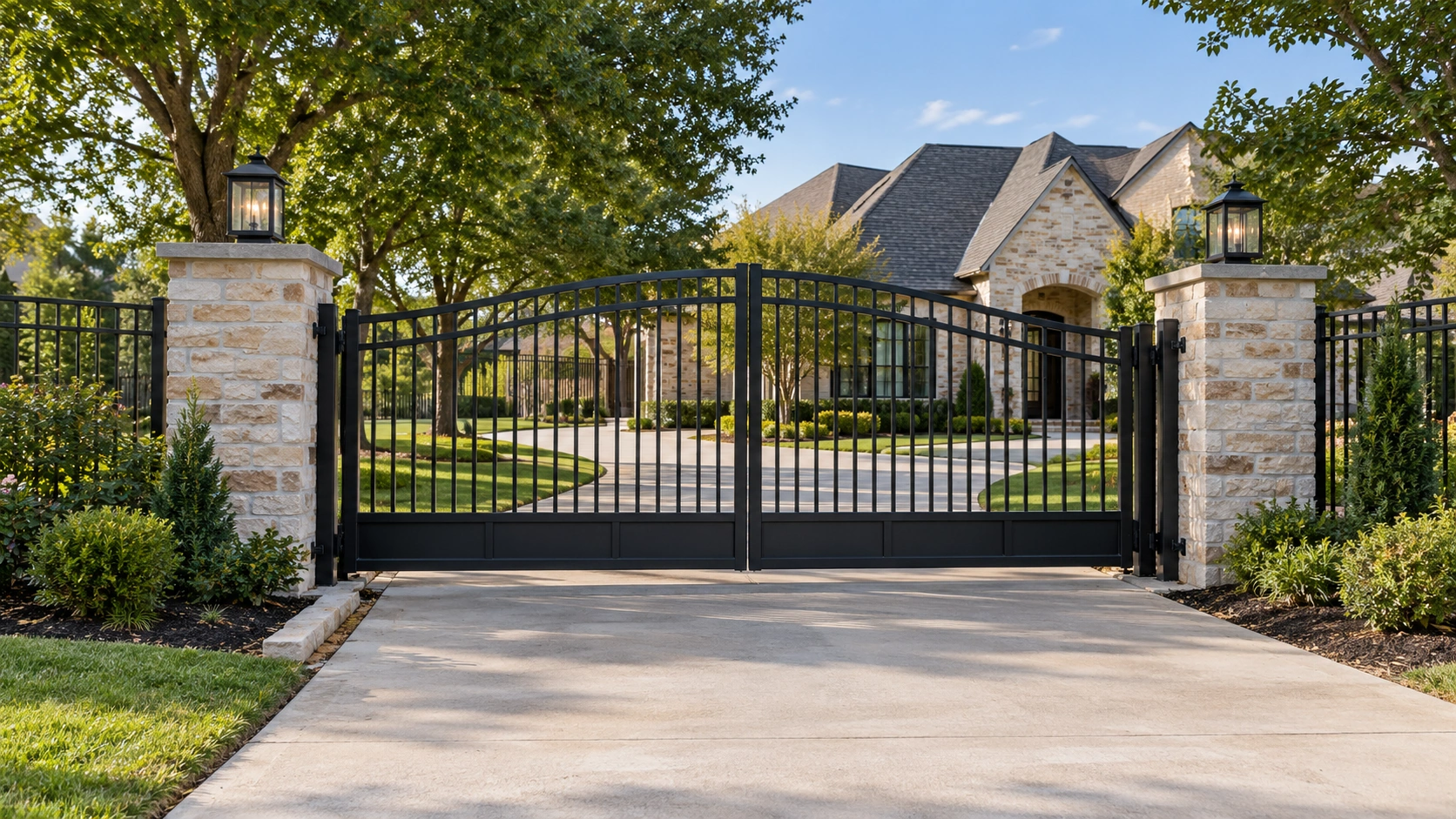
Driveway Gate Installation for Garland Properties
Homeowners usually look into a driveway gate for everyday reasons. They want one clear place where vehicles come and go, a way to control who drives onto the property, or a gate that finally matches the fence already around the yard.
Others are replacing an older gate that drags or no longer fits the entrance, or they want an opening set up so it can be automated now or later. In each case the goal is an entrance that works better day to day. A gate adds a layer of control at the drive, but it isn't a security guarantee on its own.
Planning a Driveway Gate Opening
Every opening starts with measurements: how wide the driveway is, where the entrance sits on the lot, and how cars approach it. A drive that turns in off a busy street may need the gate set farther back so a vehicle can pull fully off the road while it opens.
We also look at what's already there. Existing fence lines, brick or stone columns, trees and beds near the drive, and any walkway people use on foot all affect where posts go and which way the gate can move. Sometimes a separate walk gate beside the driveway makes more sense than opening the large gate for every visitor.
Swing Driveway Gates
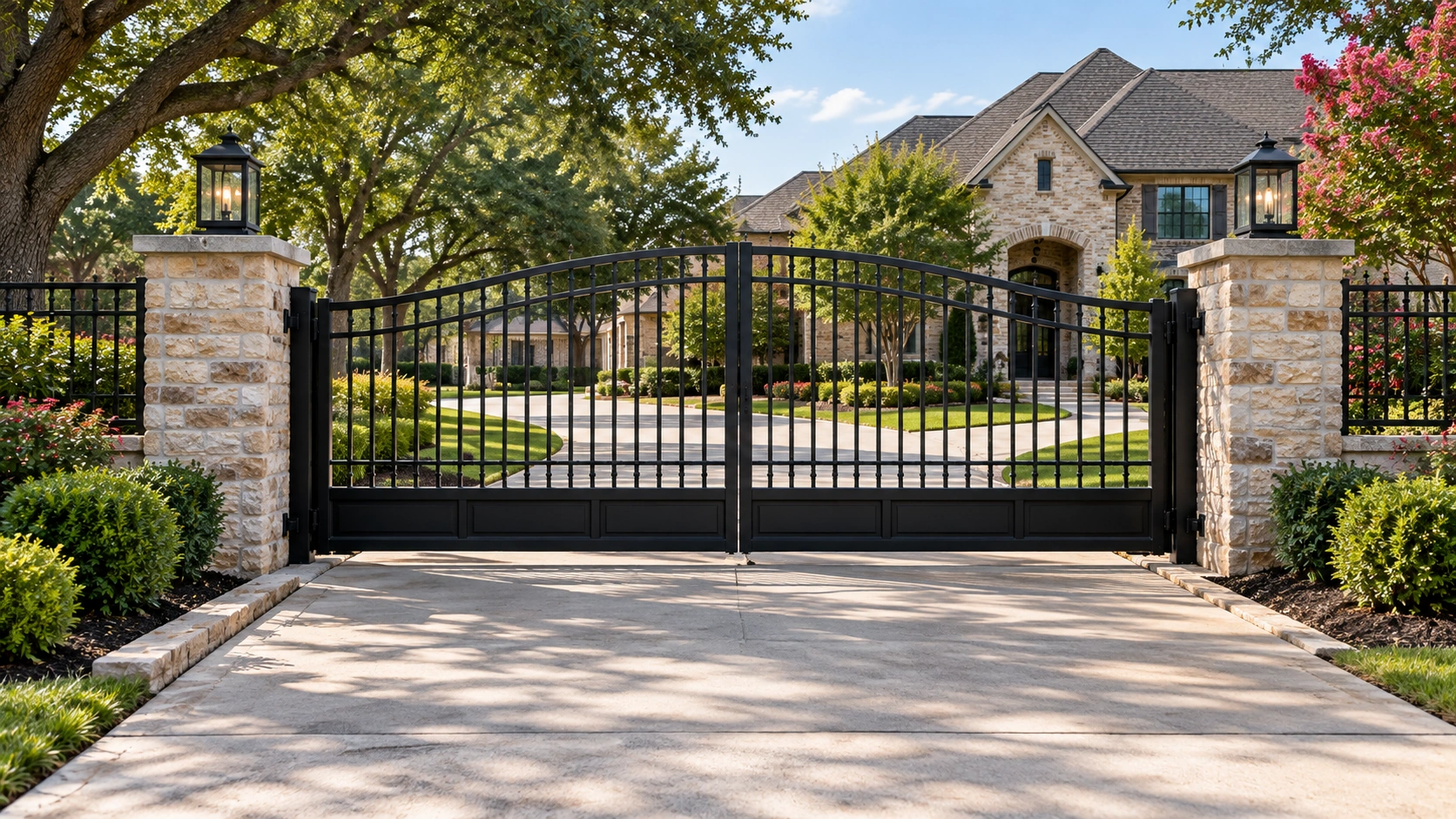
A swing gate opens on hinges through an arc, so the ground inside that arc needs to stay clear. A single leaf can suit a narrower drive, while a double gate splits a wide opening into two shorter leaves that each need less swing room.
Swing direction matters. Most gates open inward toward the property, which only works if the drive doesn't rise sharply behind the gate and nothing is parked or planted in the way. Posts or columns need to be set to carry the gate's weight and keep it hanging true.
Sliding Driveway Gates
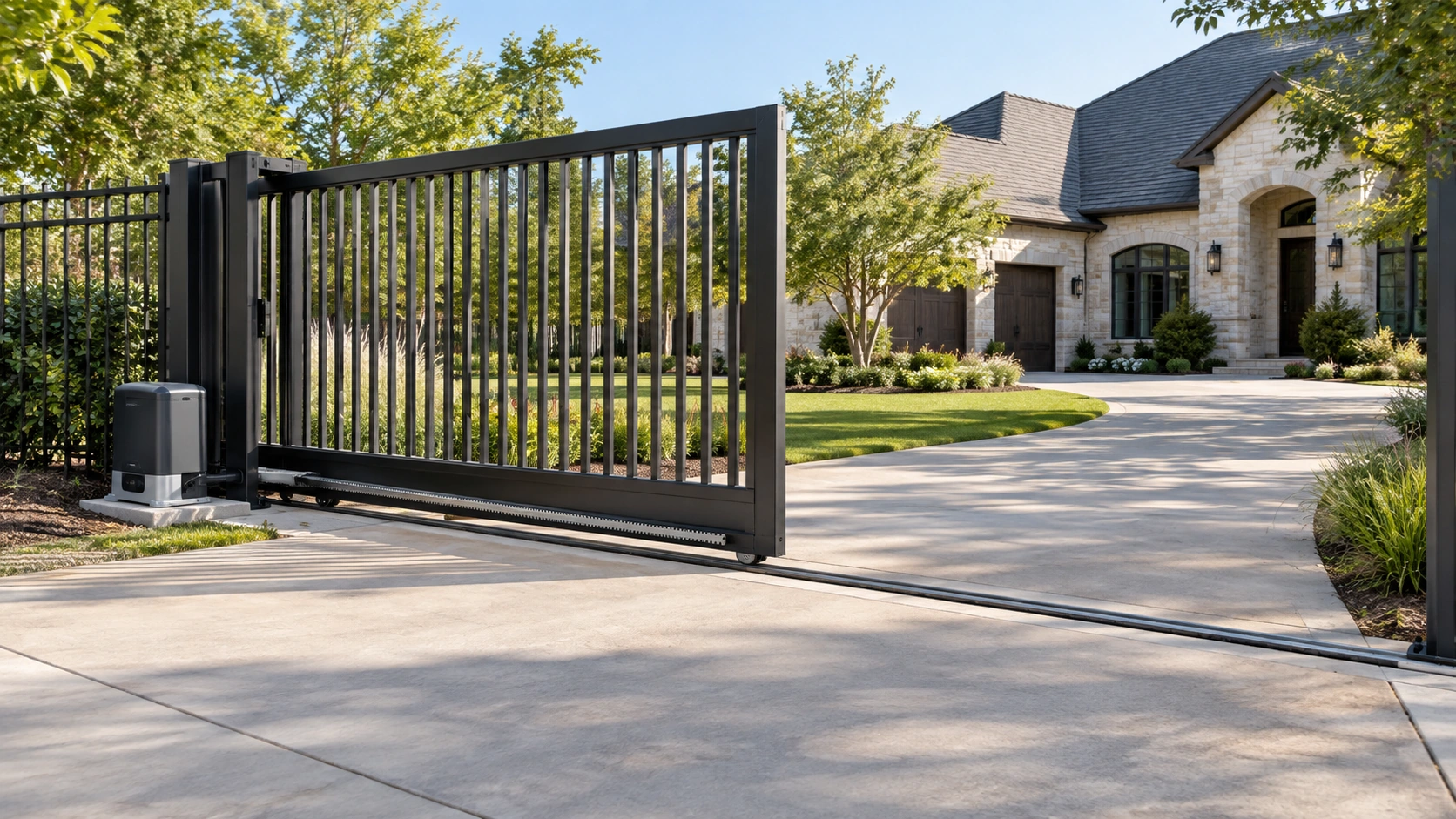
A sliding gate moves sideways across the opening instead of swinging, so it needs usable space beside the driveway where it can travel and rest when open. That run along the fence line has to be clear of trees, beds, and structures.
The shape of the drive plays a part too, since a sliding gate doesn't need room in front of or behind the opening. If the gate will be automated, the operator usually sits at the end the gate retracts toward, so that spot needs space and a path for power.
Swing Gate vs. Sliding Gate
Swing gates need a clear arc to open through and can work well when the driveway layout gives them that room.
Sliding gates move laterally and need space beside the opening to slide into.
Neither is better everywhere. A sloped drive, a very wide entrance, landscaping close to the gate, masonry columns, or a short fence line beside the opening can each point toward one option. We walk through those factors with you at the entrance. For more on how sliding gates are built, see our sliding gate information.
Automatic Driveway Gates and Access Control
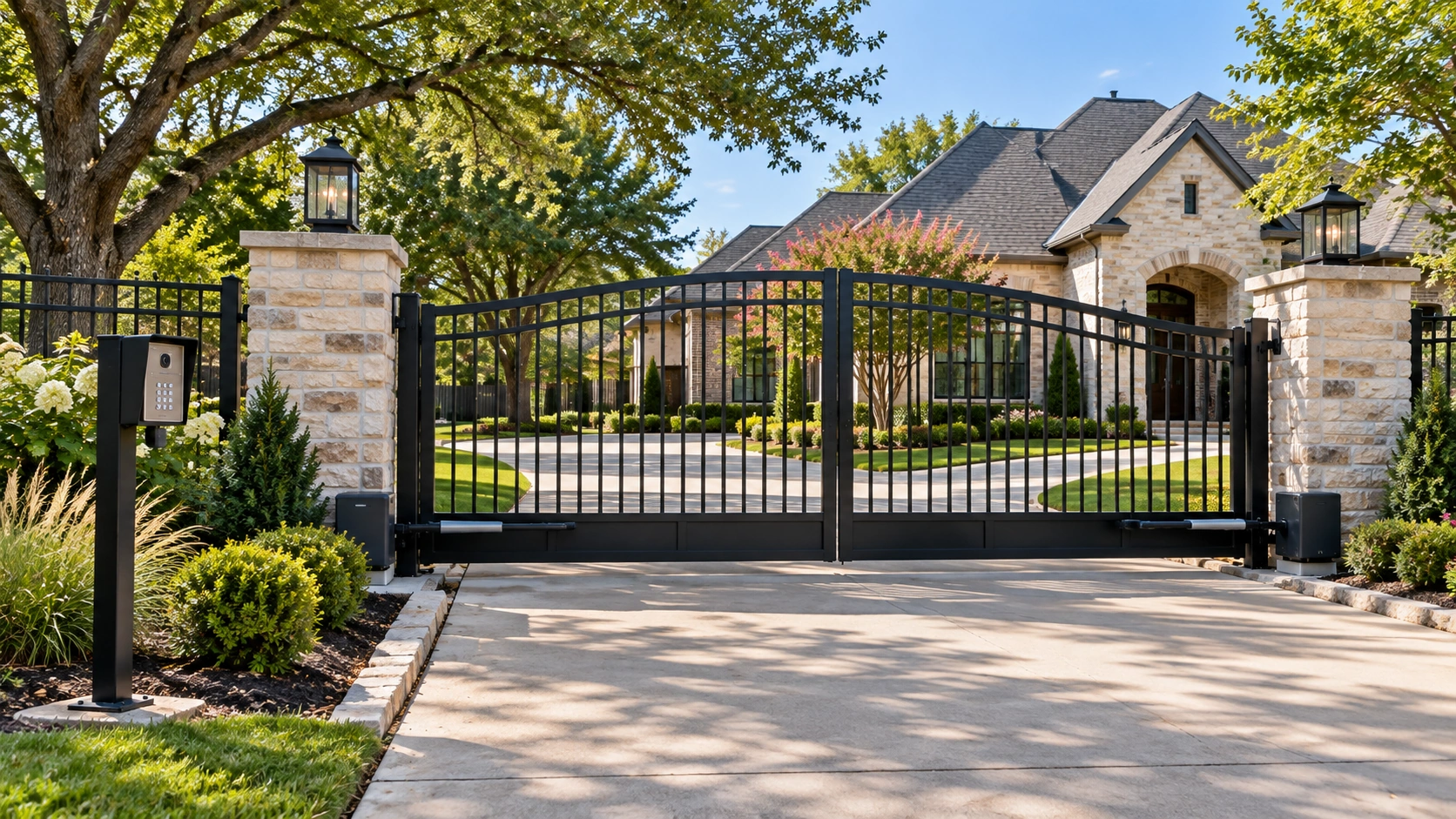
An automatic driveway gate adds an operator that opens and closes the gate, plus controls that decide when it moves. Those controls can include a keypad at the drive, an intercom for visitors, or remotes carried by the household.
Placement matters as much as the equipment. A keypad or intercom should be reachable from a car window where the vehicle naturally stops, without leaving it in the street. Read more about automatic gates and access control options.
Gate Operators and Automation Planning
Swing and sliding gates use different operators, so the choice follows the gate's movement and weight. Operator placement then depends on the posts, the ground, and where power can reasonably be brought to the gate.
We also plan where control equipment will sit, which safety devices the layout calls for, and how keypads or other entry controls tie in. Electrical work should be handled by qualified professionals, not as a DIY project.
Driveway Gates and Existing Fencing
Most driveway gates meet some kind of fence. It might be a wood privacy fence, a metal fence along the front, masonry columns at the drive, or simply the property line. The gate's posts and the fence ends need to line up so the entrance looks intentional and closes cleanly.
It's also a good time to think about walk gates and side-yard access nearby. If a new wood fence is part of the plan, see wood fence installation in Garland. Our residential gate options cover smaller gates that match.
Garland Driveway Gate Planning Considerations
Garland lots vary a lot. Some drives are short and straight off the street, others are wide, curved, or shared with side-yard access. Mature landscaping, existing fence lines, and brick or stone features near the entrance often shape where a gate can go.
The driveway approach matters too, especially where a car needs room to wait while the gate opens. Where an HOA or City of Garland rule may apply, check it before the design is final. We build to the specifications you confirm.
New Driveway Gate vs. Automating an Existing Gate
A new gate may make sense when there's no gate yet, when the current layout no longer fits how the entrance is used, or when the structure or opening needs major changes.
Automating an existing gate may be worth considering when the gate is structurally sound, moves well on its hardware, and has a practical spot for an operator and power. Not every gate is a good candidate, so we look at it before recommending either route.
Driveway Gate Installation FAQs
How do I choose between a swing gate and a sliding gate?
Start with the space you have. A swing gate needs a clear arc on the side it opens toward, while a sliding gate needs a straight run beside the opening where it can park. Slope, landscaping, and columns near the entrance often make one option simpler than the other.
How much clearance does a driveway gate need?
Clearance depends on the gate configuration and the property layout. Swing gates need enough unobstructed space for the gate leaf to travel through its full arc, while sliding gates need sufficient lateral space beside the driveway opening. We evaluate the entrance width, slope, fence line, landscaping, columns, and planned gate movement before determining the appropriate layout.
Can an existing driveway gate be automated?
Sometimes. The gate has to be structurally sound, move freely on its hinges or rollers, and have a practical spot for an operator and power. Some gates are better replaced than retrofitted, so we look at the gate before recommending either path.
Can a driveway gate use a keypad or intercom?
Yes. An automatic driveway gate can be paired with entry controls such as a keypad, an intercom, or remotes. The right mix depends on who needs to come through and how often.
What should be checked before installing an automatic driveway gate?
Look at where power can reach the gate, where vehicles will stop while the gate opens, where the operator and controls can sit, and what safety devices the layout calls for. If an HOA or City of Garland rule may apply, confirm it early.
Can a new driveway gate connect to an existing fence?
Often, yes, as long as the fence and its end posts can handle the connection. A driveway gate usually hangs from or closes against its own posts or columns, so the fence mainly needs to meet those cleanly.
Driveway Gate Installation in Garland
We plan driveway gates for homes across Garland, including around Firewheel, Duck Creek, and Camelot. These names show the areas we serve. Each entrance is still planned on its own terms.
For our broader approach, see driveway gates and gate installation, or visit the Garland service area page.
Planning a Driveway Gate in Garland?
Share the driveway width, whether you're leaning toward a swing or sliding gate, and whether you want automation. A few photos of the entrance help us prepare.